
2026 Mid-Year Tax Planning Checklist for Small Business Owners
 Rick Patel
on
Rick Patel
on

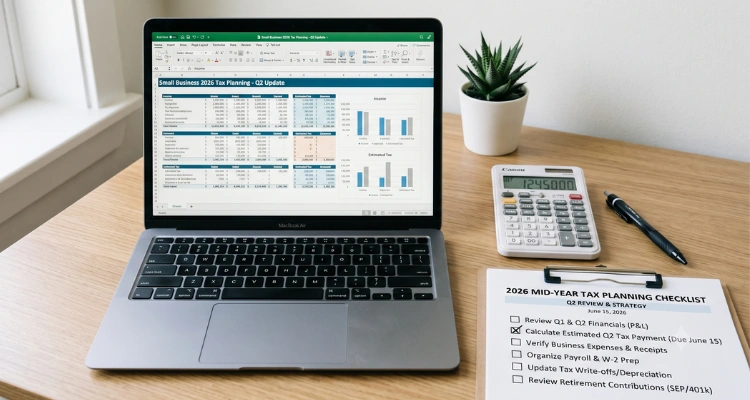
If you own a small business, waiting until tax season to review your finances can create unnecessary stress, missed deductions, and expensive surprises.
By the middle of the year, you already have enough financial data to evaluate your business performance, estimate taxes, and make smarter decisions before year-end arrives.
That is why mid-year tax planning is so important in 2026.
With rising operating costs, changing tax regulations, and ongoing economic uncertainty, small business owners need to stay proactive about financial planning.
Taking time to review your finances halfway through the year can help you:
- Estimate your tax liability more accurately
- Improve cash flow management
- Identify deductible expenses
- Avoid underpayment penalties
- Prepare for year-end financial decisions
- Strengthen overall business planning
Even small adjustments made mid-year can create meaningful tax savings later.
The small businesses that pay the least at year-end usually started planning in July, not December.
Virtue CPAs helps owners use this mid-year window to adjust quarterly payments, surface missed deductions, and avoid the cash flow surprises that hit unprepared businesses during tax season.
In this guide, you will learn how to review your finances, estimate taxes, maximize deductions, improve compliance, and prepare your business for a stronger financial position through the rest of 2026.
Key Takeaways
- Mid-year tax planning gives you time to course-correct on quarterly payments, deductions, and cash flow before year-end deadlines arrive.
- Review your profit and loss statement, cash flow statement, and balance sheet to spot rising costs, unused subscriptions, and unnecessary spending.
- Use your first six months of financial data to estimate 2026 tax liability and revise quarterly payments if revenue is significantly higher or lower than expected.
- Self-employed owners should set aside a realistic percentage of income each month to avoid being hit with a large self-employment tax bill at year-end.
- Maximize deductions by reviewing operating expenses, vehicle and travel costs, equipment purchases, home office use, and digital recordkeeping.
- Verify payroll tax filings, employee classifications, retirement contributions, and benefit-related tax credits while there is still time to fix issues.
- Strategic timing of equipment purchases and retirement contributions in Q3 and Q4 often unlocks deductions that would be missed in a December scramble.
Why Mid-Year Tax Planning Matters for Small Businesses
For many small business owners, taxes become a last-minute concern once deadlines start approaching.
Unfortunately, that approach can lead to missed opportunities, cash flow problems, and unexpected tax bills that could have been avoided with earlier planning.
Mid-year tax planning gives you a chance to step back, review your financial position, and make adjustments while there is still time to improve the outcome for the rest of the year.
Avoid Last-Minute Tax Surprises
One of the biggest benefits of mid-year tax planning is reducing the risk of unexpected tax liabilities.
If your business has grown faster than expected in 2026, you could end up owing significantly more taxes than anticipated. On the other hand, if revenue has slowed down, you may need to adjust your financial strategy to preserve cash flow.
By reviewing your numbers mid-year, you can estimate what your tax situation may look like before deadlines arrive. This gives you time to plan ahead instead of reacting under pressure later.
Improve Financial Decision-Making
Mid-year tax planning is not only about taxes. It also helps you make better business decisions overall.
When you review your financial statements regularly, you gain a clearer picture of:
- Revenue performance
- Profit margins
- Spending patterns
- Seasonal trends
- Cash flow stability
This information can help you decide whether it is the right time to hire employees, purchase equipment, expand operations, or reduce unnecessary expenses.
Good tax planning often leads to stronger financial management across the entire business.
Stay Compliant with Tax Regulations
Small businesses are responsible for handling several ongoing tax obligations throughout the year.
These may include:
- Estimated quarterly tax payments
- Payroll taxes
- Sales tax filings
- Contractor reporting requirements
Falling behind on these responsibilities can result in penalties, interest charges, and additional IRS scrutiny.
A mid-year review helps you confirm that filings, payments, and reporting obligations are staying on track.
Identifying Tax-Saving Opportunities Early
The earlier you review your finances, the more time you have to take advantage of potential tax-saving opportunities.
For example, mid-year planning may help you:
- Identify overlooked deductions
- Increase retirement contributions
- Plan equipment purchases strategically
- Adjust payroll strategies
- Improve expense tracking
Instead of rushing to find deductions in December, you can make smarter decisions throughout the second half of the year.
For small business owners, proactive planning usually creates far better results than waiting until tax season arrives.
Review Your Year-to-Date Financial Statements
Before you can make smart tax decisions, you need a clear understanding of how your business is actually performing.
A mid-year review gives you the opportunity to make smarter financial decisions while there is still time to improve the outcome for the rest of 2026.
Analyze Profit and Loss Statements
Your profit and loss statement shows how much revenue your business has generated and where your money is going.
At first glance, your sales may look healthy, but a deeper review often reveals rising expenses quietly reducing profitability. For example, you may notice that payroll costs, advertising expenses, or software subscriptions have increased significantly compared to earlier in the year.
This is also a good time to identify unnecessary spending. Small recurring costs that seemed manageable individually can become surprisingly expensive over several months.
Review Cash Flow
Cash flow is one of the biggest challenges for many small businesses, even when sales are strong.
You might have unpaid invoices, delayed customer payments, or seasonal revenue fluctuations that create financial pressure behind the scenes. Reviewing your cash flow statement mid-year helps you understand how much working capital is truly available for upcoming expenses, tax payments, payroll, or business investments.
For example, a business may appear profitable on paper but still struggle to cover short-term obligations because cash is tied up in receivables or inventory.
This review can also help you decide whether now is the right time to make major purchases or whether conserving cash would be the smarter move for the second half of the year.
Check Balance Sheets
Many business owners overlook their balance sheet, but it can provide important insights into the overall financial health of your company.
Your balance sheet helps you evaluate:
- Outstanding business debts
- Credit card balances
- Business assets
- Equipment ownership
- Accounts receivable
- Long-term liabilities
If liabilities are growing too quickly compared to assets, it could signal financial strain that needs attention before year-end.
Reviewing your balance sheet regularly also helps you prepare for financing opportunities, expansion plans, or future tax strategies.
Compare Current Performance to Prior Years
One of the most useful mid-year exercises is comparing your current financial performance to previous years.
This comparison can help you identify whether rising expenses are temporary or part of a larger trend. It may also reveal changes in customer demand, seasonal shifts, or declining profit margins that would otherwise go unnoticed.
For example, if your business historically performs strongly during the third quarter but current projections look weaker than previous years, you may need to adjust spending or improve cash reserves early.
Here’s a quick overview of the key reports you should review:
| Financial Statement | What to Focus On |
|---|---|
| Profit & Loss Statement | Revenue, expenses, profitability |
| Cash Flow Statement | Available cash and liquidity |
| Balance Sheet | Assets, liabilities, debts |
The IRS recommends maintaining accurate financial records throughout the year to support deductions and tax compliance.
Want a clear read on where your numbers actually stand at mid-year? Get a free mid-year financial review.
Estimate Your 2026 Tax Liability
A lot of small business owners avoid estimating taxes because they assume they will deal with it closer to filing season. The problem is that by the end of the year, most of your financial decisions have already been made.
If you discover too late that you underpaid taxes or failed to plan for higher profits, fixing the situation becomes much harder.
That is why mid-year tax planning matters so much.
Calculate Estimated Income Taxes
By now, your business has already generated six months of financial data.
That gives you a fairly strong indication of what your 2026 tax situation may look like.
Maybe revenue is growing faster than expected. Maybe expenses are higher than they were last year. Or maybe your profits look strong on paper, but cash flow feels tighter because operating costs have increased.
Whatever the situation, estimating your taxes now helps you avoid walking blindly into year-end.
You do not need an exact number at this stage. The goal is to understand whether your current tax payments realistically match the income your business is generating.
Review Estimated Quarterly Payments
Imagine getting to December and realizing your business underpaid taxes for the entire year.
At that point, you may be dealing with penalties, interest charges, and a large payment that puts pressure on your cash reserves.
A mid-year review helps prevent that situation.
If your business has experienced significant growth in 2026, your original quarterly estimates may no longer be accurate. On the other hand, if revenue slowed down unexpectedly, you may be overpaying and unnecessarily restricting your cash flow.
This is why smart business owners adjust tax payments throughout the year instead of relying on outdated projections made months earlier.
Reevaluate Revenue Projections
Mid-year is also a good time to revisit the assumptions you made at the beginning of the year.
For example, maybe you expected steady growth but landed several large clients much earlier than planned. Or perhaps inflation, staffing shortages, or slower customer demand affected revenue more than expected.
These changes impact more than taxes. They affect hiring decisions, expansion plans, equipment purchases, and overall financial strategy.
A realistic revenue forecast helps you make better decisions during the second half of the year instead of reacting emotionally to short-term fluctuations.
Plan for Self-Employment Taxes
If you are self-employed, taxes can become especially tricky because no employer is withholding money on your behalf.
Many business owners underestimate how quickly self-employment taxes add up, particularly during profitable years. Then tax season arrives, and suddenly a large percentage of income is owed all at once.
One of the smartest things you can do mid-year is calculate roughly how much should be set aside each month moving forward. That simple adjustment can reduce stress dramatically later.
Even profitable businesses can run into financial pressure if taxes are ignored for too long.
Planning ahead gives you far more flexibility and control over your cash flow before deadlines begin piling up.
Maximize Business Tax Deductions
One of the easiest ways to overpay taxes is by failing to track deductible business expenses properly throughout the year.
Mid-year is the perfect time to clean that up.
A thorough deduction review now can help you reduce taxable income legally while also improving your bookkeeping for the rest of the year.
Review Operating Expenses
Start with your recurring operational costs.
Most businesses spend money every month on essentials like rent, software, utilities, insurance, subscriptions, internet services, and office expenses.
The problem is that smaller recurring charges often get ignored because they seem insignificant individually.
For example, a few software subscriptions here and there may not feel expensive monthly, but over a full year they can become a meaningful deduction category.
This is also a good time to identify expenses that are no longer necessary. Many businesses continue paying for unused platforms, duplicate services, or outdated subscriptions simply because nobody reviewed them carefully.
Track Vehicle and Travel Expenses
Business travel and vehicle use are commonly overlooked deduction areas, especially for smaller companies.
If you use your car for client meetings, business errands, networking events, or travel between locations, those miles may qualify for deductions. The key is maintaining proper documentation.
A simple mileage tracking app or organized travel log can make a major difference later. Without records, even legitimate deductions may become difficult to support.
Evaluate Equipment Purchases
Mid-year is often when businesses begin considering larger purchases for growth or operational improvements.
Maybe your company needs new computers, upgraded machinery, office furniture, or additional equipment. Timing those purchases strategically may help increase deductions before year-end through options like Section 179 or bonus depreciation.
Instead of waiting until December to rush major purchases, reviewing your needs now gives you more flexibility to plan intelligently.
Review Home Office Deductions
If you regularly work from home while managing your business, you may qualify for home office deductions.
This is especially relevant for entrepreneurs who handle bookkeeping, scheduling, meetings, or administrative work remotely. Expenses such as internet service, office equipment, utilities, and dedicated workspace costs may potentially qualify depending on your setup.
Organize Receipts and Documentation
A deduction is only as good as the records supporting it.
One of the smartest mid-year habits is organizing your receipts and financial documents before they pile up further. Digital recordkeeping systems can make this process much easier and reduce stress when tax season arrives.
Strong documentation not only supports deductions but also helps protect your business if the IRS ever requests additional information or conducts an audit.
Evaluate Payroll and Employee Tax Obligations
Payroll mistakes can become expensive very quickly for small businesses.
Even companies with strong revenue and healthy profits can run into trouble if payroll taxes, employee classifications, or benefit reporting are handled incorrectly.
That is why mid-year is a smart time to review payroll compliance before small issues grow into larger problems.
Verify Payroll Tax Filings
Many business owners assume payroll software automatically handles everything correctly.
While payroll platforms are helpful, errors can still happen, especially if employee information, tax settings, or payment schedules were entered incorrectly.
A mid-year review helps you confirm that:
- Payroll taxes are being filed on time
- Employee withholdings are accurate
- State and federal tax payments match payroll records
- Payroll reports align with accounting records
Even a simple reporting mistake can create penalties if it goes unnoticed for too long.
Review Employee Classification
Employee classification has become a growing compliance issue for many small businesses, especially companies using freelancers, remote workers, or contractors.
For example, a worker treated as an independent contractor may legally qualify as an employee based on their actual responsibilities and level of control within the business.
Misclassification can create serious tax consequences involving:
- Payroll taxes
- Overtime obligations
- Benefits
- Penalties and back payments
If your business has expanded or changed staffing structures during 2026, this is a good time to revisit classifications carefully instead of waiting until year-end.
Evaluate Retirement Contributions
Mid-year planning also creates an opportunity to review retirement contributions for both you and your employees.
Depending on your business structure, contributing to retirement accounts such as a SEP IRA, SIMPLE IRA, or 401(k) may help reduce taxable income while improving long-term financial planning.
Many business owners delay retirement planning because they are focused on day-to-day operations. However, these contributions can become valuable tax-saving tools when planned strategically before the end of the year.
Check Employee Benefits and Tax Credits
If your business offers employee benefits, now is the time to review whether those programs are creating available tax advantages.
Some businesses may qualify for credits or deductions related to:
- Healthcare contributions
- Retirement matching
- Employee retention incentives
- Educational assistance programs
Even if your company is relatively small, certain tax credits may still apply depending on your payroll structure and benefit programs.
A proactive payroll review in the middle of the year can help you avoid compliance problems, identify savings opportunities, and improve financial planning before tax deadlines begin approaching.
Concerned about payroll classification, retirement contributions, or benefit-related tax credits? Schedule a consultation with our CPA team.
Conclusion
dMid-year tax planning gives you something every small business owner needs more of, which is time.
When you review your finances halfway through the year, you still have the opportunity to make meaningful adjustments before tax deadlines arrive.
You can improve cash flow, identify overlooked deductions, adjust estimated payments, organize records, and make smarter financial decisions while there is still flexibility to act.
Whether your business is growing quickly or navigating financial challenges, consistent tax planning can help you reduce surprises and build a stronger financial foundation for the future.
Working with experienced tax professionals can also make a major difference, especially as tax regulations continue evolving in 2026.
At Virtue CPAs, small business owners can receive personalized accounting, tax planning, and financial consulting support tailored to their specific goals. If you want to reduce your 2026 tax liability and improve your overall financial planning, contact Virtue CPAs today for professional guidance and a personalized consultation.
Frequently Asked Questions