
Missed Your Q2 Estimated Tax Payment? Here’s What Happens Next
 Rick Patel
on
Rick Patel
on

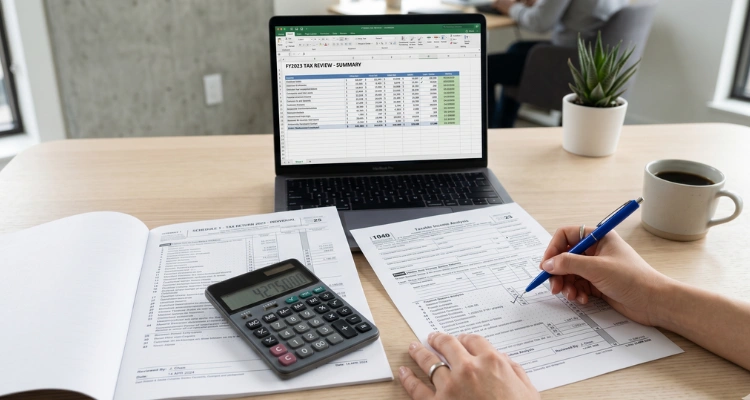
A missed estimated tax deadline can feel more stressful than a normal filing task because there is no single, immediate IRS response. You may not receive a notice right away, but the delay can still matter because estimated tax penalties are tied to time, underpayment amount, and changing IRS interest rates.
For 2026 calendar-year taxpayers, the federal Q2 estimated tax payment covers income earned from April 1 through May 31, and the IRS schedule lists June 15 as the due date for that payment.
If that date has already passed, the best next step is usually not to wait for a letter. The IRS says penalties and interest can continue to grow until the balance is paid, so paying as soon as practical can help reduce the damage.
We often see business owners hesitate because they are unsure whether to pay the full missed amount, make a partial payment, or roll everything into the next quarter. That hesitation can be costly. The more organized response is to calculate the shortfall, pay what you can, document the payment, and adjust the rest of the year.
Federal tax details in this guide were checked against current IRS resources available on June 7, 2026. This is an educational federal guide only. State estimated tax rules may differ, and your final answer should be reviewed with a qualified tax advisor.
Key Takeaways
- The deadline still matters after it passes: Missing June 15 does not automatically create a disaster, but the IRS may calculate an underpayment penalty for the late or insufficient Q2 payment.
- The penalty is not a flat fee: The IRS calculates the penalty using the underpaid amount, how long it remained unpaid, and the published quarterly underpayment rates.
- Paying sooner usually helps: A late payment made now can stop additional penalty and interest from building on that unpaid amount going forward.
- The next payment does not erase the missed date: A larger Q3 payment may help your annual position, but it may not eliminate the late-payment period that already occurred for Q2.
- Safe harbor rules still matter: The 90%, 100%, and 110% safe harbor tests can help determine whether you are at risk for a penalty at all.
- Uneven income may change the calculation: Freelancers, seasonal businesses, and owners with lump-sum income may need the annualized income method instead of four equal payments.
- Records are your first fix: Updated books, income records, deductions, and withholding details help you calculate the late payment more accurately.
- State taxes need separate review: A federal catch-up payment does not automatically solve state estimated tax exposure, especially for multi-state owners and freelancers.
What Happens If You Miss Your Q2 Estimated Tax Payment?
If you miss the Q2 estimated tax deadline, the IRS may charge an underpayment penalty if you did not pay enough tax by the due date for that payment period. The IRS also says you can owe the penalty even if you are due a refund when you file your annual return.
That surprises many freelancers and owners. A refund at filing time does not always mean every quarterly payment was timely. Estimated tax is a pay-as-you-go system, which means timing matters as much as the final annual tax amount.
For a missed Q2 payment, the issue is usually the gap between what should have been paid by June 15 and what was actually paid by that date. If nothing was paid, the entire required Q2 amount may be treated as late. If you underpaid, only the shortfall may be exposed.
The IRS does not always demand payment the next day. It may calculate the penalty later and send a notice if you owe it. But waiting for that notice does not improve the situation because penalty and interest can continue accumulating while the balance remains unpaid.
How Does the IRS Calculate the Underpayment Penalty?
The IRS calculates the estimated tax underpayment penalty using three core factors: the amount underpaid, the period when the payment was due and unpaid, and the published quarterly underpayment interest rates. This is why a small delay and a long delay can produce very different results.
For 2026, the IRS quarterly interest-rate table showed an underpayment rate of 6% for Q2, April through June, and 7% for Q3, July through September, as of June 7, 2026. Rates can change by quarter, so a late Q2 balance that remains unpaid into Q3 may be affected by the next quarter’s rate.
The exact penalty is usually not something most owners need to calculate by hand before making a late payment. The practical goal is to reduce the unpaid period. Paying the missed amount, or as much of it as possible, can reduce the time-based portion of the exposure.
| Penalty factor | How it works | Why it matters after Q2 |
|---|---|---|
| Underpaid amount | The IRS looks at how much should have been paid compared with what was paid by the due date. | The smaller the unpaid balance, the smaller the potential penalty base. |
| Unpaid period | The calculation considers when the required payment was due and how long it remained unpaid. | Waiting longer can increase the amount owed even if the original tax does not change. |
| Quarterly rate | The IRS uses published underpayment rates that can change each calendar quarter. | A missed June payment can cross into a new rate period if it remains unpaid after June. |
| Safe harbor status | If you met a safe harbor rule, you may avoid the penalty even if your final tax bill is higher than expected. | This is why prior-year tax, current-year projections, and withholding must be reviewed together. |
Note: IRS penalty calculations depend on the taxpayer’s facts and payment history. This table is a planning summary, not a penalty calculation.
Bottom Line: The fastest way to reduce the late-payment impact is to shorten the unpaid period and confirm whether a safe harbor exception applies.
Should You Pay Now If You Cannot Pay the Full Amount?
Yes, if you cannot pay the full missed Q2 amount, making a partial payment can still help. The IRS payment page states that penalties and interest continue to grow until the full balance is paid, so reducing the unpaid amount sooner may reduce future charges.
A partial payment is not a complete fix, but it is usually better than doing nothing. It creates a record, lowers the unpaid balance, and gives you a clearer starting point for adjusting the rest of the year.
The IRS lists several payment options, including Direct Pay from a bank account, debit card, credit card, digital wallet, IRS online account, Business Tax Account, EFTPS, same-day wire, check, money order, and cash through retail partners.
For many freelancers and individual owners, an IRS online account or Direct Pay can be useful because payment history is easier to confirm. For businesses that need more formal tracking, EFTPS or Business Tax Account may be more appropriate. Processing fees may apply for card and digital wallet payments.
Can Your Next Quarterly Payment Fix a Missed Q2 Payment?
A larger future payment can help your annual tax position, but it usually does not erase the fact that the Q2 payment was late. Estimated tax penalties are generally measured by payment period, so a Q3 catch-up payment may reduce future exposure without automatically removing the Q2 late period.
This matters for business owners who assume they can simply double the next estimate. That strategy may be practical from a cash-flow perspective, but it should be treated as a catch-up approach, not a guarantee that the IRS will ignore the missed June deadline.
The better question is whether you have enough paid in for the year under the IRS safe harbor tests. The IRS says many taxpayers avoid the penalty if they owe less than $1,000 after withholding and credits, or if withholding and estimated payments meet the required 90% current-year or 100% prior-year tax test, with a 110% prior-year rule for certain higher-income taxpayers.
| Catch-up option | When it may help | What to watch |
|---|---|---|
| Pay the missed Q2 amount now | Best when cash is available and the late period should be limited quickly. | Keep confirmation and apply the payment to the correct tax year and payment type. |
| Make a partial Q2 catch-up payment | Useful when cash is tight but some payment can be made immediately. | The remaining unpaid balance can still accrue additional charges. |
| Increase Q3 and Q4 estimates | Helpful when income is strong and future cash flow can absorb the adjustment. | This may not eliminate the late Q2 period that already happened. |
| Increase W-2 withholding | Helpful for owners or spouses with wages, especially if withholding can be adjusted quickly. | Withholding mechanics differ from estimated payments, so timing and amount should be reviewed carefully. |
| Use annualized income method | Helpful for seasonal businesses, project-based freelancers, and owners with uneven income. | Requires better records and may involve Form 2210 and Schedule AI at filing time. |
Note: The right catch-up approach depends on entity type, cash flow, income timing, withholding, and prior-year tax.
Bottom Line: Do not assume the next payment fixes everything. First determine whether Q2 was actually underpaid, then decide how to catch up.
What Records Should You Review Before Making a Late Q2 Payment?
Before making a late Q2 payment, review actual income, deductible expenses, owner draws or distributions, payroll, withholding, credits, and any prior estimated payments already made for 2026. The goal is to avoid guessing twice: once on the missed payment and again on the catch-up plan.
The IRS says individuals, including sole proprietors, partners, and S corporation shareholders, generally use Form 1040-ES to figure estimated tax. The IRS also says taxpayers should estimate expected adjusted gross income, taxable income, taxes, deductions, and credits for the year.
For freelancers, the most important number is usually net profit, not gross deposits. For pass-through owners, the key is the income flowing to the individual return. For businesses with payroll, the owner should also review withholding and payroll tax deposits separately from income tax estimates.
Clean monthly records make this work easier. If your books are behind, reviewing bank deposits alone can overstate taxable income, while ignoring deductible expenses can lead to unnecessary overpayment. Virtue Advisors supports business owners with monthly accounting services that help keep income, expenses, and reporting ready for tax planning.
What If Your Income Was Uneven or Seasonal?
If your income was uneven, seasonal, or driven by a large project or capital event, you may not need to treat every quarter the same. The IRS notes that taxpayers with uneven income may be able to use the annualized income installment method to avoid or reduce the penalty.
This is especially relevant for consultants, real estate professionals, creators, contractors, hospitality operators, restaurant owners, and businesses with large seasonal swings. A flat four-payment estimate may overstate one quarter and understate another.
Annualizing income is more record-heavy because you must show when income was earned and when deductions were incurred. The IRS FAQ notes that taxpayers who annualize may complete and attach Form 2210 with Schedule AI to show that uneven payments match uneven income.
This does not mean every uneven-income taxpayer should annualize. It means the method should be considered when the missed Q2 payment happened because income arrived later, revenue was backloaded, or a major client paid after the Q2 period closed.
Do State Estimated Taxes Change What You Should Do Next?
State estimated taxes should be reviewed separately because a federal payment does not automatically satisfy state obligations. Deadlines, income thresholds, payment portals, penalties, pass-through entity rules, and nonresident owner requirements can vary by state.
This matters for business owners serving customers in multiple states, freelancers who moved during the year, remote consultants, pass-through owners, and companies with sales, payroll, property, or employees outside their home state.
A missed federal Q2 payment may also be a sign that state and local tax exposure has not been mapped correctly. Virtue Advisors offers state and local tax services for businesses that need help understanding multi-jurisdiction obligations, sales and use tax exposure, and state-level compliance requirements.
The safest approach is to separate the work into two tracks: federal catch-up first, then state review. That avoids assuming that one payment solves every jurisdiction.
Why Virtue Advisors: Help Turning a Missed Deadline Into a Plan
A missed estimated tax payment is rarely just a payment issue. It often points to a bigger planning gap: late books, unclear income projections, weak cash-flow reserves, owner compensation issues, or confusion about how pass-through income affects personal taxes.
Virtue Advisors looks at these issues through an advisory-first lens. Instead of treating the missed Q2 payment as an isolated problem, our team connects the tax payment to your books, entity structure, withholding, state exposure, and the rest of your 2026 tax plan.
With 1,100+ clients served across sectors and 100k+ service hours delivered in tax, accounting, valuation, and advisory support, Virtue Advisors helps business owners move from reactive deadline management to clearer, more consistent financial planning.
For a freelancer, that might mean building a quarterly savings rhythm. For a growing pass-through business, it may mean reviewing owner distributions, payroll, and safe harbor targets. For a multi-state company, it may mean connecting federal catch-up payments with state and local tax planning.
The goal is simple: understand the risk, reduce the unpaid balance, document the payment, and create a better system before the next deadline arrives. That is how a missed Q2 payment becomes a planning checkpoint instead of a recurring problem.
Conclusion
Missing the Q2 estimated tax payment does not mean you are out of options. It does mean the clock matters. The IRS may calculate a penalty based on the shortfall, how long it remained unpaid, and the quarterly underpayment rates in effect during that period.
The most practical next step is to pay what you can as soon as possible, confirm the payment was applied correctly, and update your projections for Q3 and Q4. If your income is uneven, review whether annualizing income could reduce the penalty. If state exposure exists, review that separately.
Most importantly, do not let the missed deadline become a pattern. Clean books, realistic cash-flow planning, and scheduled review points can make estimated taxes easier to manage for the rest of the year.
Virtue Advisors helps business owners, freelancers, and pass-through owners bring tax planning, accounting, and advisory guidance into one connected process.
Frequently Asked Questions